Flooring
Choose the Best Flooring for Basements That Stands Up to Moisture and Time
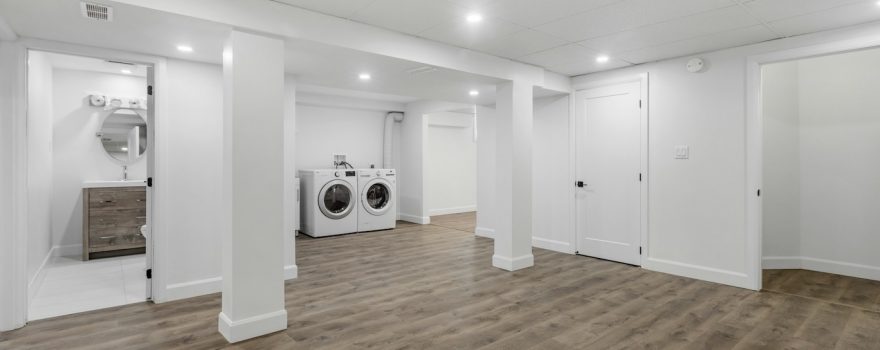
TL;DR: The best flooring for basements has to handle three things that every other floor in your house can phone in: moisture, a cold concrete slab, and the occasional water event without becoming a project. Luxury vinyl plank (LVP) is the runaway favorite for most New England basements, with porcelain tile, epoxy coatings, and engineered wood (in dry, finished basements) as strong runners-up. Solid hardwood and traditional laminate are almost always a mistake below grade.
Planning a basement floor project? Reach out to Builders Surplus or call 866-739-1636 — our team will help you compare basement-rated flooring options.
Why the Best Flooring for Basements Is a Different Question Entirely
Basements aren’t bedrooms. The floor sits directly on (or just above) a concrete slab that wicks moisture year-round, stays cold deep into spring, and floods occasionally when a sump pump fails or a heavy storm overwhelms the drains. None of that is hypothetical in Rhode Island, Connecticut, and Massachusetts basements — humidity, freeze-thaw cycles, and the occasional inch of standing water are part of life below grade. The best flooring for basements accepts those conditions and is built to handle them, not retreat from them. Pick a product that wasn’t designed for below-grade installs and you’ll be replacing it within a few years.
Need help comparing options? Stop by Builders Surplus or call 866-739-1636. Here at Builders Surplus, our team helps homeowners pick flooring that holds up to the realities of New England basements.
Start with Moisture Testing
Before you pick anything off a sample board, test the slab. Tape a 2-foot square of plastic sheeting to the concrete with painter’s tape, sealing all four edges, and leave it for 24 to 72 hours. If you find condensation under the plastic when you peel it back, you have a moisture issue that flooring alone won’t solve. The fix isn’t a better-rated product — it’s addressing the moisture (sealing the slab, fixing exterior drainage, adding a vapor barrier system). Skip this step, and even the most waterproof flooring will trap moisture and create mold.
Luxury Vinyl Plank (LVP) — the Default Best Choice
Luxury vinyl plank is the most-installed basement flooring in New England right now, and for good reason. It’s 100 percent waterproof, looks remarkably close to real hardwood or stone, and most lines are DIY-friendly with floating click-lock installation. Water that seeps up through the slab won’t damage it, water that pools on top wipes up without staining, and the planks can be installed directly over a clean, level concrete slab.
Worth knowing about LVP before you buy:
- Look for a wear layer of at least 12 mil (20 mil for high-traffic basements).
- Choose rigid-core (SPC or WPC) construction for basement use — softer flexible vinyl can show every imperfection in the slab.
- Click-lock floating installation handles concrete movement better than full glue-down.
- Plan an underlayment with built-in moisture barrier and acoustic dampening.
The full pros and cons of vinyl plank flooring are worth reading before committing — like every product, it has trade-offs.
Porcelain Tile — the Most Durable Option
If you want flooring you can install once and never think about again, porcelain tile is unmatched. It’s truly waterproof, won’t dent or scratch, and works beautifully with radiant heat (worth considering in a New England basement — a heated floor is a small luxury that changes how often the room actually gets used). The trade-offs are real: tile is colder underfoot, costs more, and takes longer to install.
If you go this route, the durability of porcelain tile lives up to the reputation — and the waterproof flooring options used in bathrooms translate directly to basement applications.
Epoxy and Polished Concrete — Underrated for Workshops and Utility Areas
Not every basement needs the same flooring throughout. For workshops, gym areas, and utility zones, an epoxy coating or polished-concrete finish on the existing slab is fast, affordable, and bulletproof. Epoxy resists chemicals, oil, and water, sweeps clean in minutes, and allows the slab to continue breathing. Colored epoxy with flakes gives a finished look; industrial gray is the true utility finish.
Engineered Wood — Only If Conditions Are Right
Engineered wood can work in a finished, dry basement with a properly insulated slab and a vapor barrier — but it’s a much riskier choice than the alternatives. Conditions have to be near-ideal, and a single burst pipe usually means starting over. Solid hardwood is essentially never a good idea below grade — the buckled hardwood floor guide exists because basement installs are a leading cause.
Laminate, Carpet, and What to Avoid
Two products that look attractive on the showroom floor are usually wrong for basements:
- Traditional laminate: The HDF core swells dramatically when wet, which can happen the first time moisture seeps up through the slab. A few “waterproof” laminate lines exist, but for basements, LVP almost always wins on price and reliability.
- Wall-to-wall carpet: Holds moisture, breeds mold, and stays musty after even a small water event. If you want soft underfoot in a finished basement, use area rugs over LVP that you can lift, dry, or replace.
Don’t Forget the Subfloor System
A subfloor underlayment between the slab and the finished flooring is where most professional basement installs separate themselves from amateur ones. A properly specified subfloor:
- Creates an air gap that breaks the thermal bridge to the cold slab.
- Adds a real moisture/vapor barrier between the concrete and your flooring.
- Lets the slab breathe so moisture doesn’t get trapped between layers.
- Improves underfoot comfort by adding a small amount of give and warmth.
- Levels minor imperfections in the slab.
Look for engineered basement subfloor panels (sometimes branded as DriCore or similar) — they’re rated specifically for below-grade installations and make a noticeable difference in how the finished floor feels.
Plan the Flooring Around How You’ll Actually Use the Space
Match the product to the room. A finished family room or guest suite calls for a higher-end LVP that looks and feels like real wood. A workshop, gym, or utility area can lean toward epoxy or commercial-grade tile. A laundry zone needs absolutely waterproof flooring that allows for quick cleanup. Mix products where it makes sense — a transition between LVP in the finished space and epoxy in the utility area is perfectly normal and often the smartest move.
Pick a Floor That Won’t Make You Redo This
The best flooring for basements is the one that handles moisture, cold, and the occasional water event without complaint — and still looks great after a decade. For most New England basements, that means luxury vinyl plank with a moisture-rated subfloor underneath. For utility zones, epoxy or polished concrete. Match the product to the conditions and the use, and the floor disappears into the room the way a good floor should.
Here at Builders Surplus, our expert team is ready to help you compare basement-rated flooring, underlayments, and finishes. Stop by one of our locations in Rhode Island, Connecticut, or Massachusetts, reach out online, or call 866-739-1636 to talk through your basement project.
Frequently Asked Questions
Can I install hardwood flooring in a basement?
Solid hardwood is essentially never a good idea below grade — moisture damage is almost inevitable. Engineered wood can work in a dry, climate-controlled finished basement with a vapor barrier, but it’s still riskier than LVP or tile. The hardwood flooring installation tips guide covers what to do above grade, where hardwood actually belongs.
What’s the warmest flooring option for a basement?
Porcelain tile combined with electric or hydronic radiant heat is the warmest finished option overall. LVP installed over a basement subfloor panel is the next warmest because the panel breaks the thermal bridge to the cold slab. Bare LVP directly on a slab is the coldest.
Do I need a vapor barrier under basement flooring?
Yes — almost always. Even a slab that tests dry today will see moisture changes seasonally. Most basement subfloor systems include a vapor barrier, or you can lay a 6-mil poly sheet under a separate underlayment. Skipping this step is one of the most common reasons basement floors fail.
How do I handle a flood after a finished basement install?
LVP and porcelain tile shrug off most water events if you act fast — lift the planks (LVP is designed to be reinstalled), dry the slab and underlayment thoroughly, and reinstall. Carpet and traditional laminate usually have to be replaced after a flood.
Where can I find quality basement-rated flooring?
Here at Builders Surplus, we carry luxury vinyl plank, tile, and engineered flooring rated for basement use, plus underlayments and trim. Contact us online or call 866-739-1636 to talk through your basement project.
Photo by Point3D Commercial Imaging Ltd. on Unsplash